VoxelFormer: Parameter-Efficient Multi-Subject Visual Decoding from fMRI

VoxelFormer: Parameter-Efficient Multi-Subject Visual Decoding from fMRI

VoxelFormer is a lightweight transformer architecture that enables multi-subject training for visual decoding from fMRI.

September 2025 · Chenqian Le, Yilin Zhao, Nikasadat Emami, Kushagra Yadav, Xujin Chris Liu, Xupeng Chen, Yao Wang
Neural and Computational Mechanisms Underlying One-shot Perceptual Learning in Humans

Neural and Computational Mechanisms Underlying One-shot Perceptual Learning in Humans

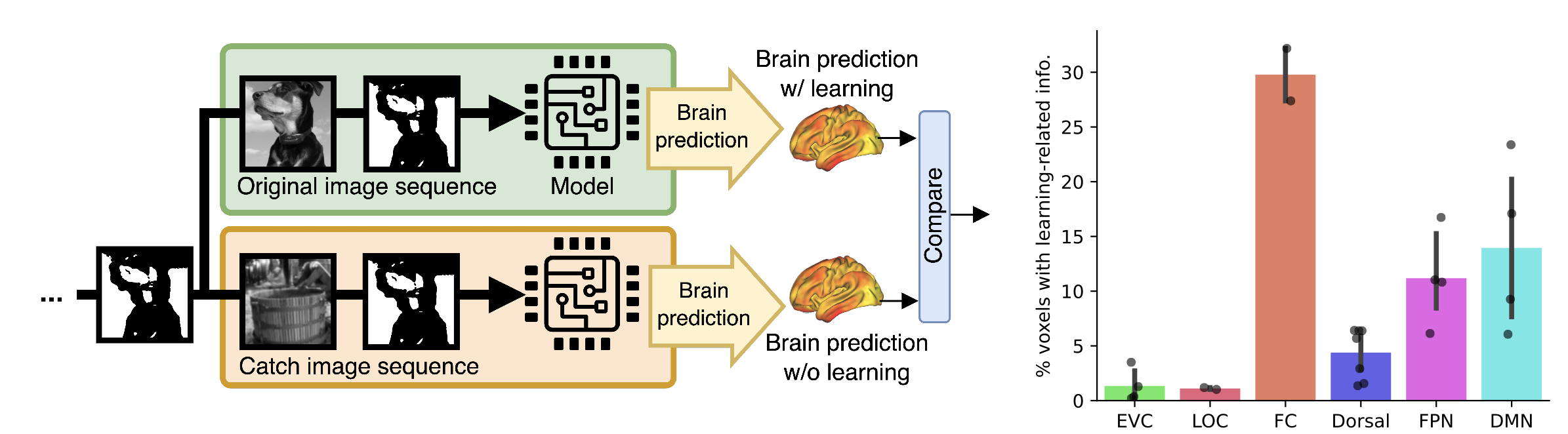
In this paper, we investigate the neural and computational mechanisms underlying one-shot perceptual learning in humans. By introducing a novel top-down feedback mechanism into a vision transformer and comparing its representations with fMRI data, we find high level visual cortex as the most likely neural substrate wherein neural plasticity supports one-shot perceptual learning.

May 2025 · Xujin Chris Liu, Ayaka Hachisuka, Jonathan D. Shor, Daniel Friedman, Patricia Dugan, Ignacio Saez, Fedor E. Panov, Yao Wang, Werner Doyle, Orrin Devinsky, Eric K. Oermann, Biyu J. He
Longitudinal deep neural networks for assessing metastatic brain cancer on a large open benchmarks

Longitudinal deep neural networks for assessing metastatic brain cancer on a large open benchmark

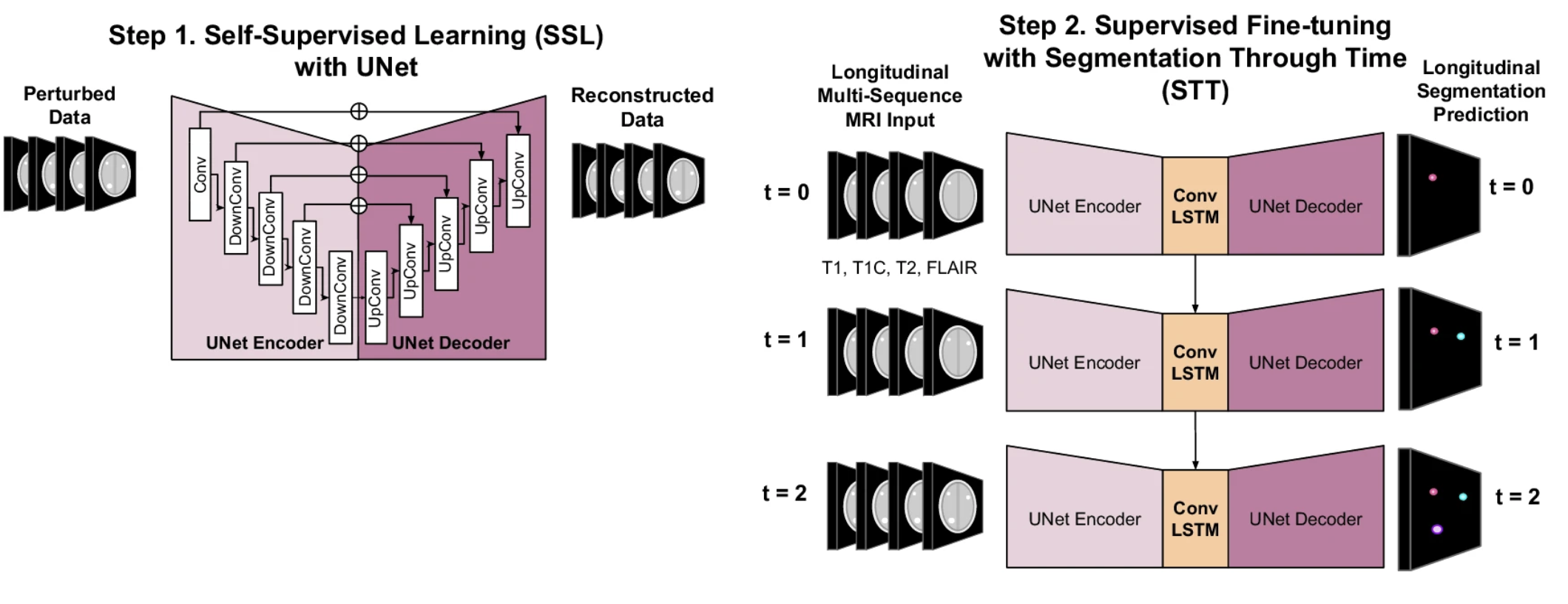
We present NYUMets-Brain, the world’s largest, longitudinal, real-world dataset of cancer consisting of the imaging, clinical follow-up, and medical management of 1,429 patients. Using this dataset we developed Segmentation-Through-Time, a deep neural network which explicitly utilizes the longitudinal structure of the data and obtained state-of-the-art results at small (<10 mm3) metastases detection and segmentation.

September 2024 · Katherine E. Link, Zane Schnurman, Xujin Chris Liu, Young Joon Fred Kwon, Lavender Yao Jiang, Mustafa Nasir-Moin, Sean Neifert, Juan Diego Alzate, Kenneth Bernstein, Tanxia Qu, Viola Chen, Eunice Yang, John G. Golfinos, Daniel Orringer, Douglas Kondziolka, Eric Karl Oermann
Automated, Scalable and Generalizable Deep Learning for Tracking Cortical Spreading Depression Using EEG

Automated, Scalable and Generalizable Deep Learning for Tracking Cortical Spreading Depression Using EEG

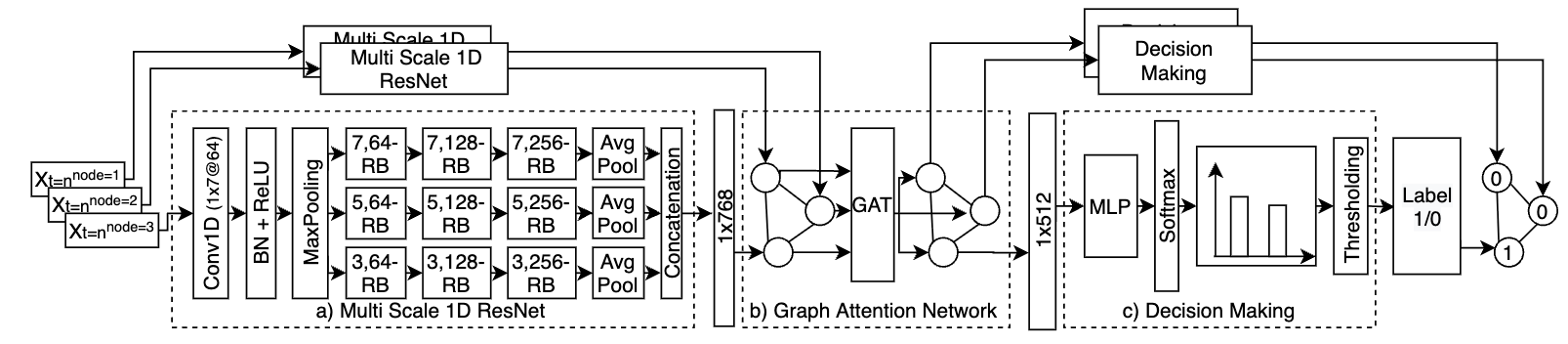
We present a graph neural network that is able to track cortical spreading depressions in scalp EEG signals. We show that our model is scalable to different densities of EEG and generalizable to different head models.

May 2021 · Xujin Liu, Alireza Chamanzar, Lavender Y. Jiang, Kimon A. Vogt, Jose M. F. Moura, Pulkit Grover