I went on a short trip to Utah to try to relax for a bit and work on my long-overdue quarter-life crisis. After a few years in New York, where there are no stars, I’d forgotten how much I liked just looking at them. I took this picture in a bit of a trance, not knowing what to do with this strange feeling.
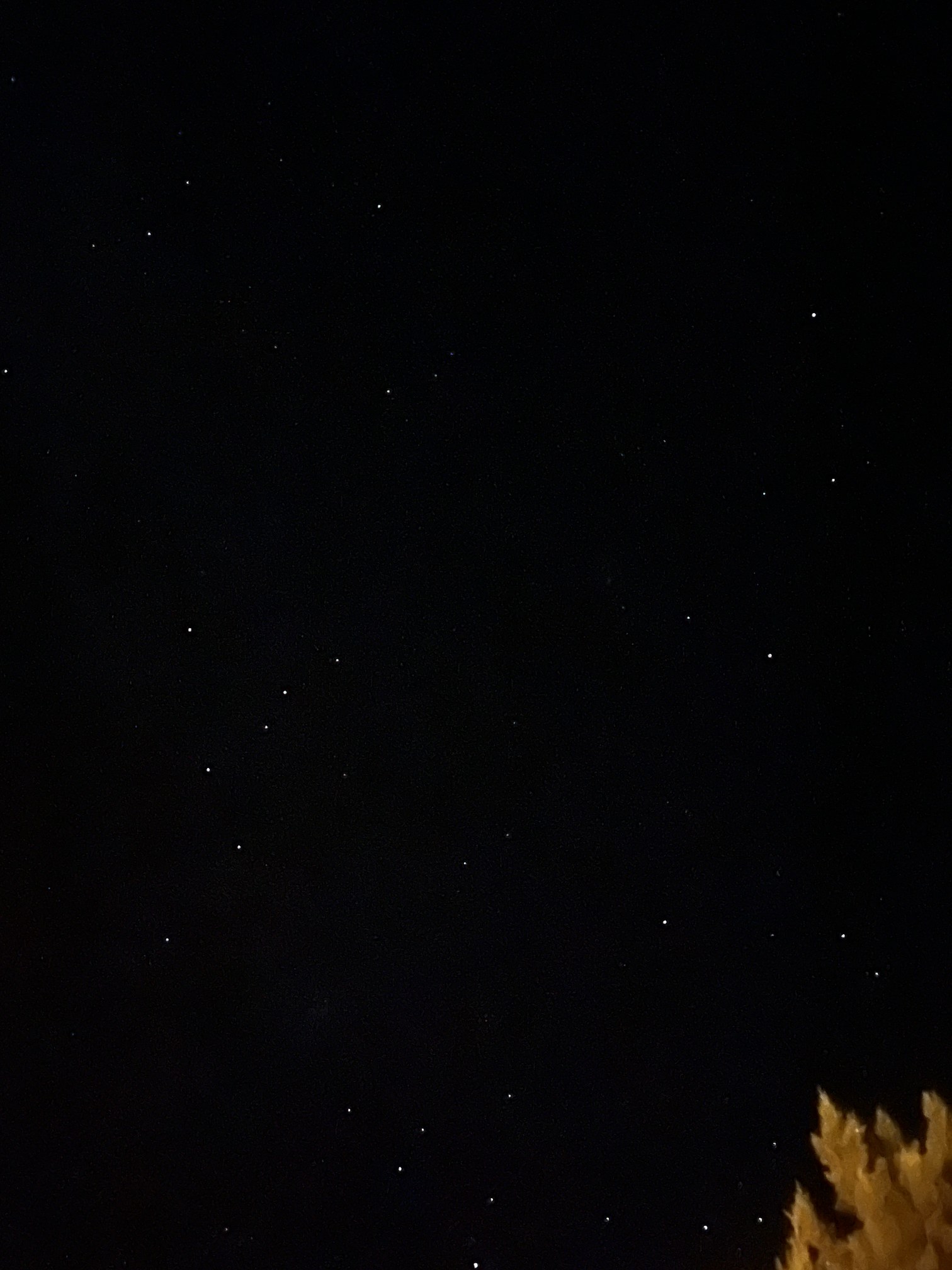
Perhaps I would feel less lost if I knew what these stars were. So I vibe coded a tool to find out:
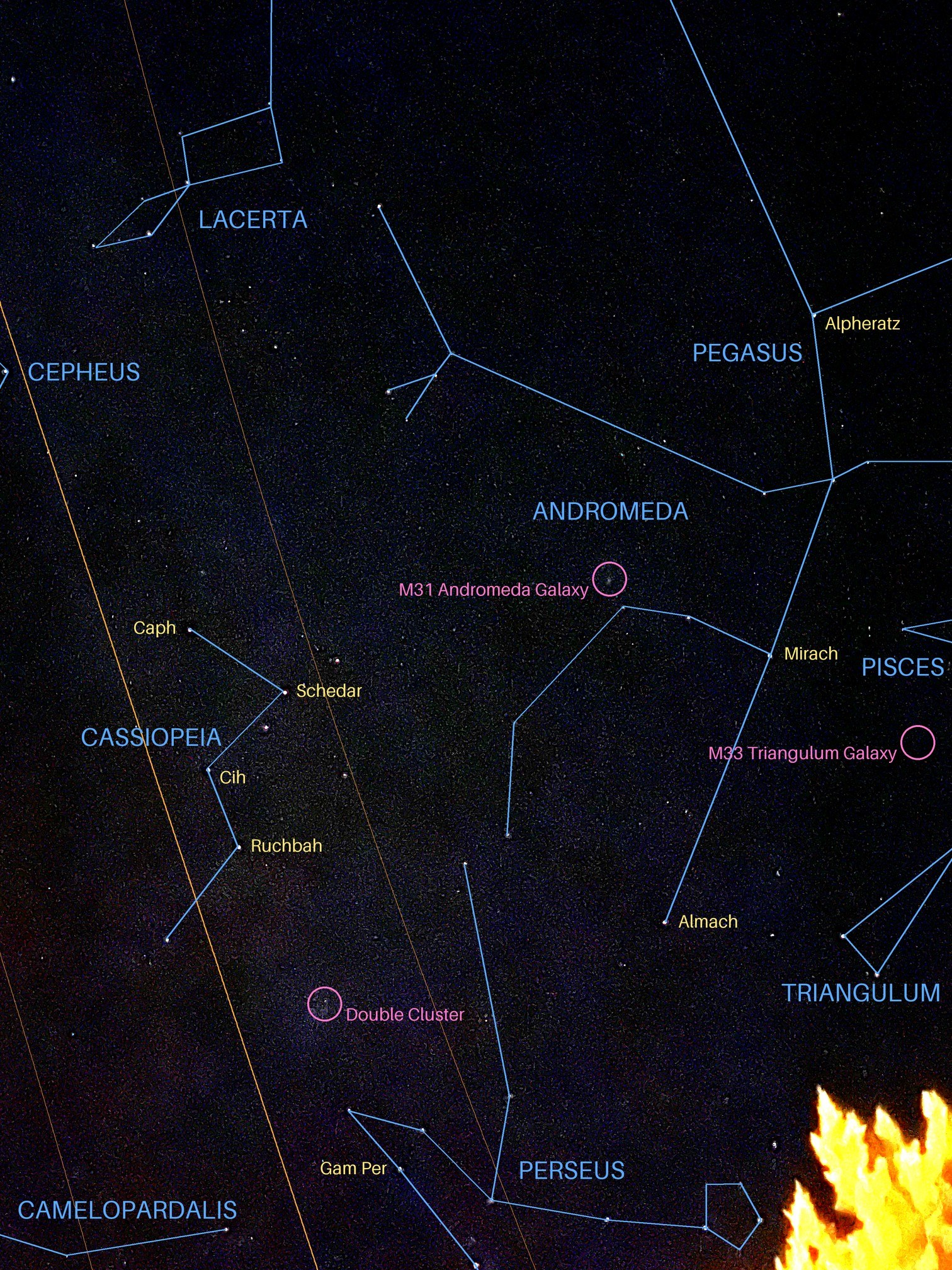
Oddly reassuring: this annotation completely resolved my reservations about my future, my waning enjoyment of all my old hobbies, my receding hairline (some say it’s not that bad; I both agree and disagree), and a creeping sense of generalized unease.
Inspired by this, I decided to give my own life the same treatment, to combat the occasional empty feeling of being who I am. If stars can be identified from their positions, surely I can too. So I matched the three points of my life I’m sure about to stars whose light left them at the time: GJ 1289 (26.5 light-years) for when I was born in Changsha, and Ross 248 (10.3 light-years) for when I left for college in Pittsburgh. For New York, I used the only thing in the frame whose light is that recent: a tree, lit by a streetlight.
Then I fit a Gaussian process to find out where I’ll be at 50:
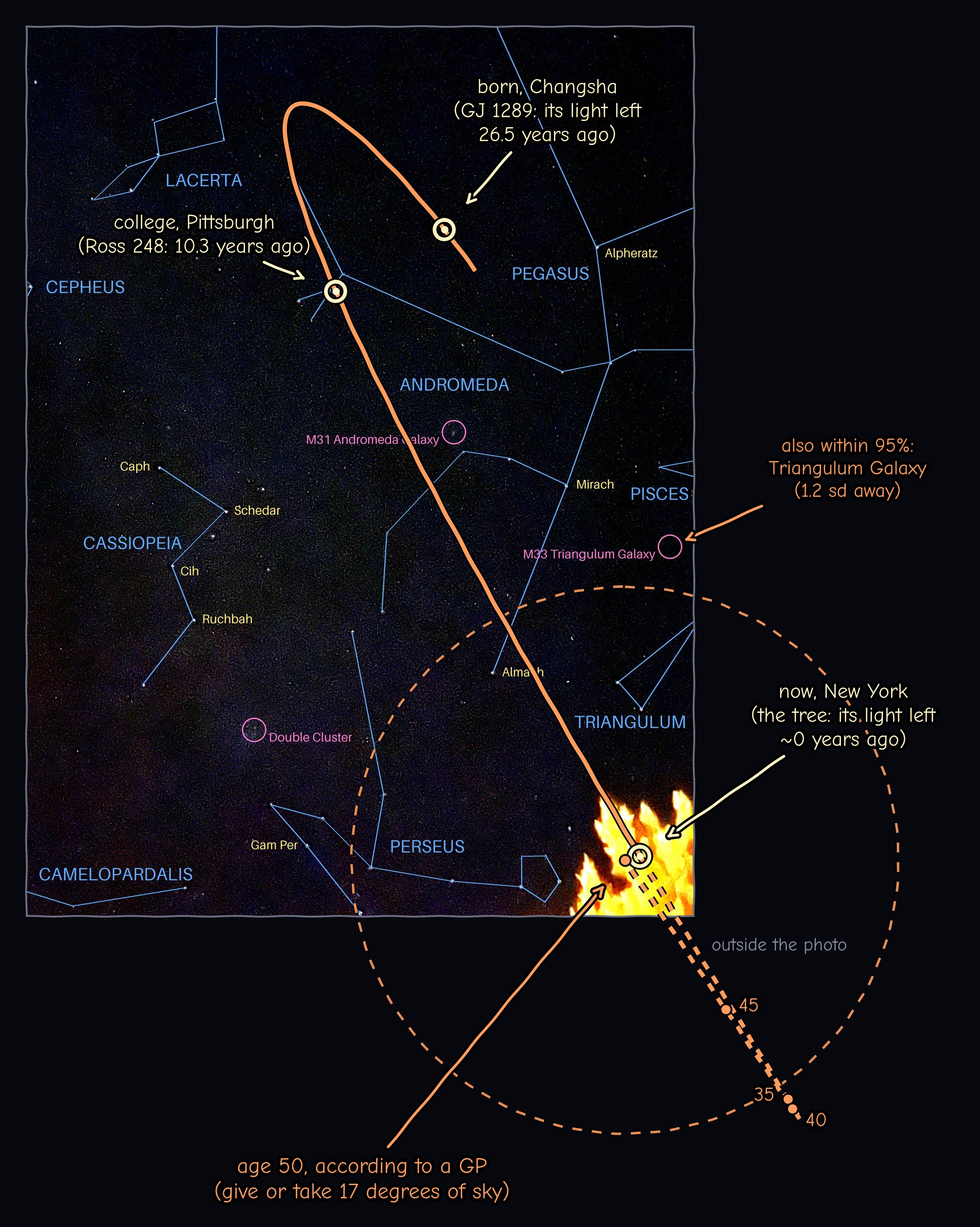
According to the model, I leave the picture next year and don’t come back until 48. At 50, I’ll be either on this tree in New York or in the Triangulum Galaxy. (95% confidence.)
To be sure, I drew 100,000 samples from the posterior:
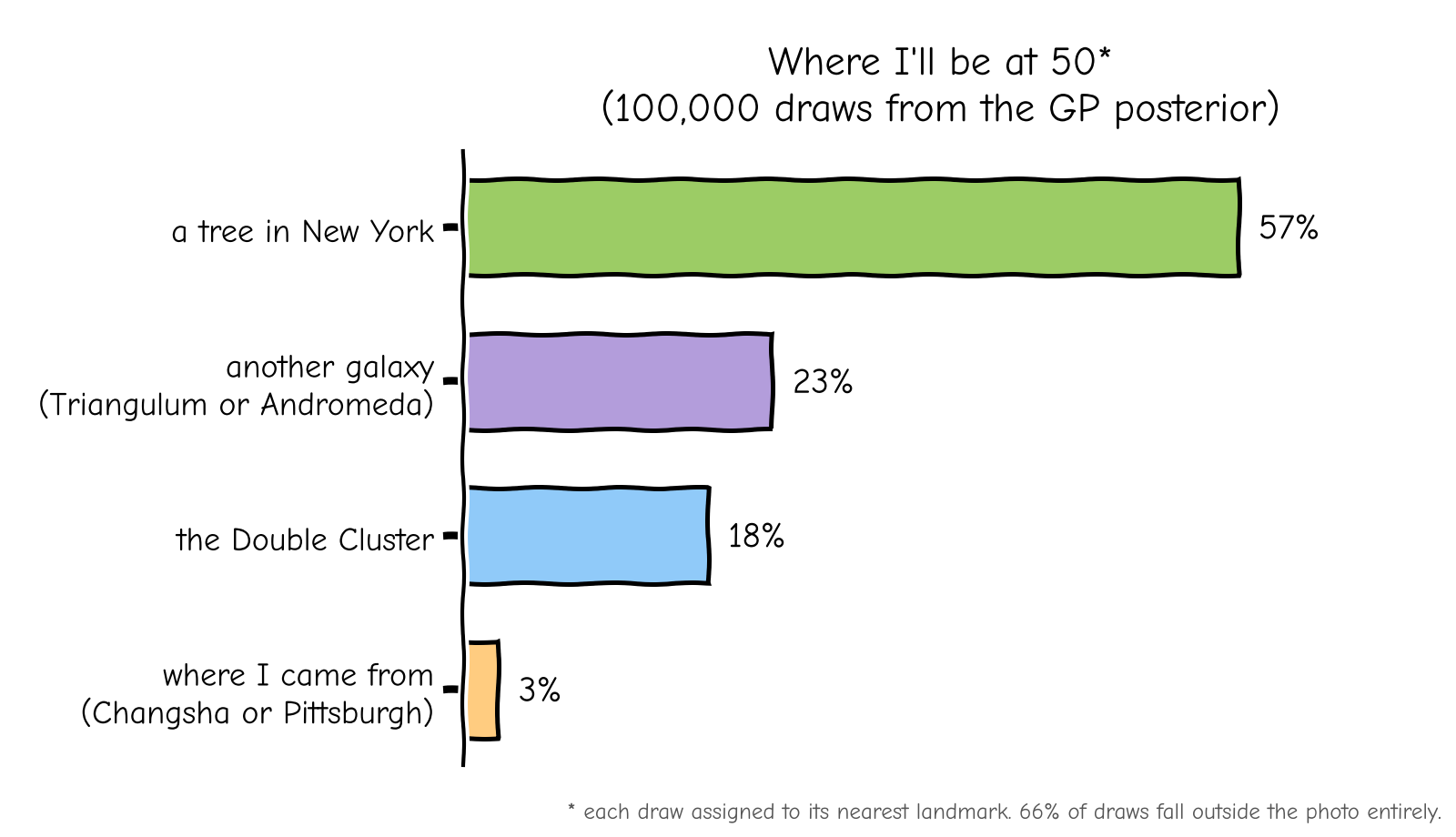
Changsha and Pittsburgh: 3%. Statistically, no longer an option.
P.S. If you want to annotate your own sky (or life), the tool and an agent skill are on GitHub. They work on any night-sky photo where stars are visible.